Tartu’s natural gas buses
Tartu operates 25 bus routes, which are serviced every day by 52 buses. Since Tartu is striving for a clean and more human-centred living environment, five of these buses are already environmentally friendly gas buses, with three more added in December 2016. Quite soon, the number of gas buses in Tartu will rise to 62 and thus from 2019 all buses servicing Tartu city routes will be modern and ecological gas buses.
We are also thinking about future sustainability and, when possible, intend to start using biogas ideally produced right here in Tartu to power buses on city routes.

Electric vehicles
The European Union and Estonia have set a long-term strategic goal of increasing the share of renewable energy in transport – the goal is to raise the use of renewable fuels in transport to 10% by 2020. To achieve this, liquid fuels will be required to contain 5-7% biofuels, public transport will be shifted to renewable energy and alternative renewable energy sources will begin to be used in transport.
Using e-vehicles, including electric buses, will assist in achieving these goals, i.e. reduce fossil fuel consumption, if the course of 100% of electricity for electric vehicles having to be generated from renewable sources is maintained.
The adoption and development of electric vehicles has already been promoted and supported by most other European countries and cities for some time. Firstly, electric vehicles help attain a cleaner living environment and, secondly, it is also a rapidly developing field of business.
Electric vehicles are simple in design and therefore their operation and maintenance costs are low. On average, electric motors contain about five moving parts, which are of course subject to wear, but in traditional vehicle engines these parts number in the hundreds. Electric vehicles require neither oil changes nor gearbox maintenance. Their only costs are those related to batteries.
Advantages of electric vehicles:
-
No exhaust gases
-
Less noise
-
Low travel expenses
-
Low energy consumption
-
Reliable
-
High efficiency
-
Nearly maintenance-free
-
Easy to use
-
Long service life
-
Availability of free parking
Of the 500 electric cars purchased for social workers in 2011 for Estonia’s emission allowances, Tartu received 30. The city government has purchased four additional electric vehicles for city officials.
The electric cars granted to the city government lead to better accessibility of the services offered to citizens, primarily regarding social and communal services.
Thanks to Estonia’s electromobility programme (ELMO), Tartu currently has 11 quick charging points for electric vehicles. The SmartEnCity project funded by the European Commission will see the construction of five additional quick charging stations in Tartu’s city centre area.
Tartu’s transport development plan for 2012-2020 contains several actions to facilitate the spread and use of electric vehicles:
-
Fundamental research for assessing the feasibility of adopting electric and hybrid electric buses;
-
If feasible, purchasing and adopting electric and hybrid electric buses for Tartu city routes;
-
Creation of a municipal bus depot;
-
Preparing an electromobility improvement action plan;
-
Raising awareness of electromobility (information days for citizens and enterprises, information on the website);
-
Facilitation of the use of electric bicycles and scooters (creation of bicycle storage facilities with bicycle and e-scooter charging capacities, creation of a mobile application for users);
-
Creation of recharging points for electric vehicles;
-
Development of electric and gas vehicle parking concessions.

Non-motorised transport
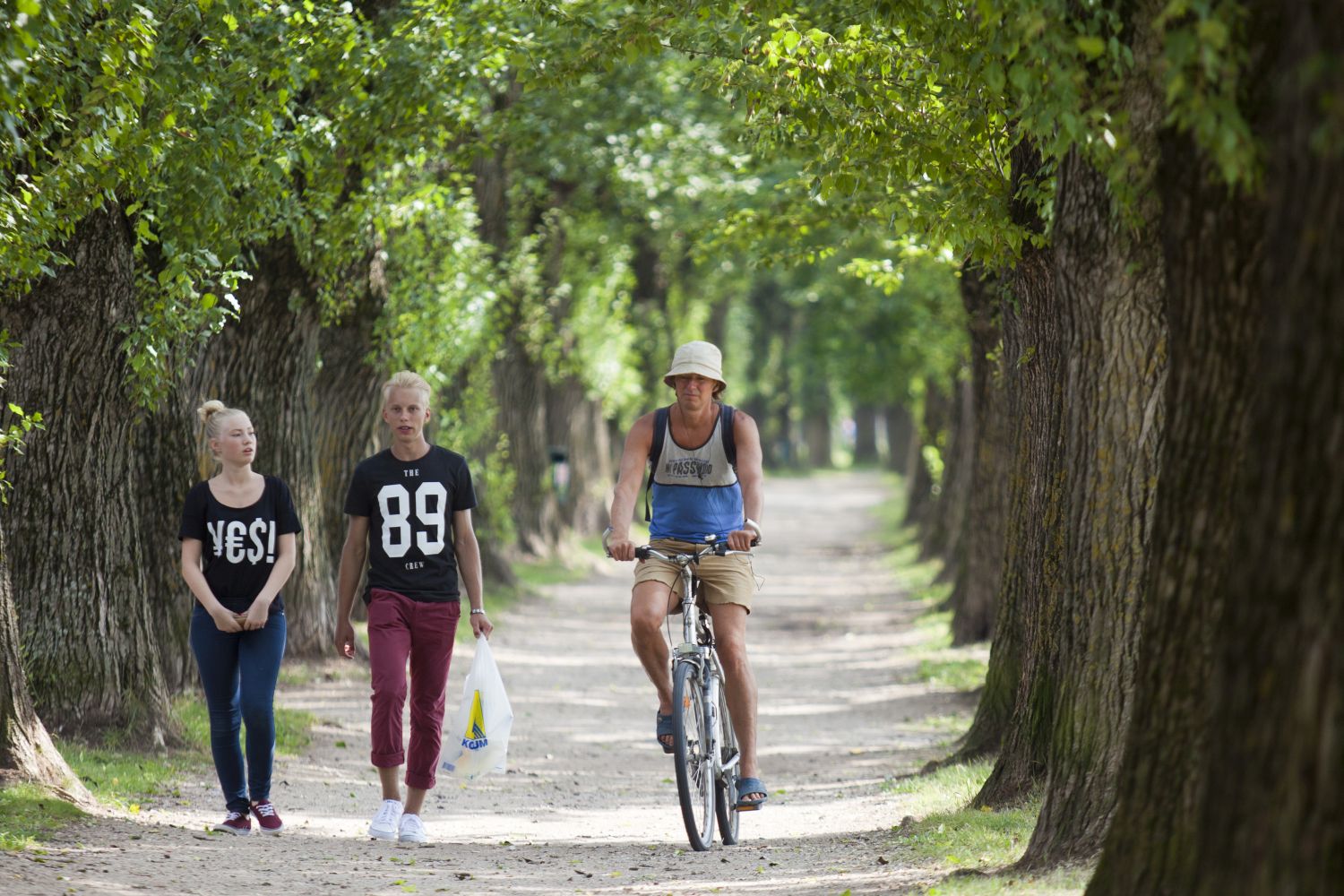
In recent years, the city of Tartu has made a considerable effort to advance non-motorised transport, especially bicycle transport. Whereas in 2010 cyclists made up 1-1.5% of all traffic, by the end of 2016 that number had risen to 4.6%.
Non-motorised transport paths in Tartu:
Length of paved footpaths: 186 km
Length of non-motorised transport paths: 75 km
Non-motorised transport path development projects underway in Tartu: new non-motorised transport paths (pdf)
To get a better overview of non-motorised traffic, in 2016, new non-motorised transport paths were installed with two automatic counters, with more to follow.
In order to encourage the use of bicycles in city transport, Tartu is planning to create a bicycle rental system and connect it with other means of public transport. The objective of creating the bicycle rental system is to achieve a greener and cleaner city environment, promote non-motorised transport, improve citizens’ mobility opportunities and health, use a more economical transport system and develop modern, smart urban space.